Nurse Practitioner Programs in Nevada 2026
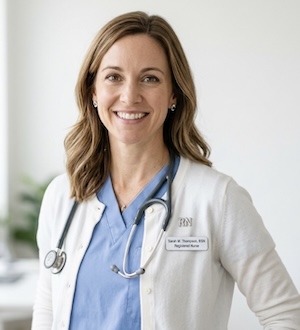
Nevada has NP programs at both master’s and doctoral levels, all CCNE-accredited. Students choose a population focus, complete supervised clinical hours, and pursue national certification through the AANP or ANCC. Nevada has full practice authority. To prescribe controlled substances, APRNs register with the Board of Pharmacy. Schedule II drugs require 2 years of clinical experience or a physician protocol.
Sponsored School(s)


Nevada doesn’t have a large number of NP programs, but the ones that exist are accredited and cover the most in-demand specialties. The state’s full practice environment means NPs who graduate and complete their transition period can operate their own patient panels, prescribe independently, and work without a physician oversight agreement. That’s a meaningful distinction for anyone choosing where to build an advanced practice career.
Use the links below to jump to program listings, degree options, clinical training requirements, and salary data for Nevada nurse practitioners.
- NP programs in Nevada
- MSN vs. DNP degree options
- What NP programs cover
- Nevada’s full practice environment
- NP salary and job outlook in Nevada
NP Programs in Nevada
Nevada has several CCNE-accredited schools offering NP programs. Each has its own set of specialties, degree levels, and delivery formats. Some are primarily online with on-campus intensives. Others are hybrid. Below are the in-state accredited options.
University of Nevada, Reno (UNR) offers NP programs through the Orvis School of Nursing. Specialties include family nurse practitioner (FNP), adult-gerontology primary care, and psychiatric mental health nurse practitioner (PMHNP). Students can pursue an MSN, a DNP, or a post-master’s certificate depending on their existing credentials. The Orvis School coordinates clinical placement for students in the FNP track, completing 780 supervised clinical hours without requiring students to self-arrange preceptors.
University of Nevada, Las Vegas (UNLV) offers a family nurse practitioner program through its School of Nursing. The MSN-FNP is delivered in a hybrid format combining online coursework with on-campus simulation labs at UNLV’s Clinical Simulation Center in Las Vegas. Course delivery uses a mix of synchronous and asynchronous formats.
Touro University Nevada (Henderson) offers a CCNE-accredited MSN-FNP program that runs approximately 20 months. The program combines online coursework with on-campus clinical intensives and provides placement assistance for clinical practica, though students may also need to identify and secure preceptors in their own communities. Graduates are eligible to sit for the AANP or ANCC Family Nurse Practitioner certification exams.
Accredited online programs from out-of-state institutions are another option, and many RNs in Nevada pursue them. Students should verify before enrolling that the program can support or arrange a clinical preceptorship within Nevada. NPs must hold an active Nevada RN license before applying for APRN licensure; see Nevada nursing license requirements for RN licensure details.
MSN vs. DNP: Choosing Your Degree Level
Nevada NP programs offer degrees at both the master’s (MSN) and doctoral (DNP) levels. The difference isn’t about what you’re licensed to do. Both produce NPs eligible to sit for national certification. The difference is in depth, preparation, and how far the degree takes you beyond direct patient care.
MSN programs typically run two to three years past the BSN and concentrate on clinical training in the NP specialty. They’re the more common starting point. DNP programs add a practice-focused doctoral component covering healthcare systems, evidence-based practice, and organizational leadership at a level the MSN doesn’t reach. CCNE-accredited DNP programs require a minimum of 1,000 post-baccalaureate practice hours, compared to a general minimum of 500 for MSN programs.
Major nursing organizations have advocated for the DNP as the entry-level standard for NP practice, though that hasn’t been adopted as a uniform requirement. In Nevada and nationally, both MSN and DNP graduates are eligible for NP licensure and national certification.
What NP Programs in Nevada Cover
Population Focus
Every NP program prepares students to practice within a specific population focus. Nevada’s accredited in-state programs currently offer tracks in family and individual across the lifespan (FNP), adult-gerontology primary care, and psychiatric mental health (PMHNP). FNP is the most widely available specialty at in-state schools.
Other population foci, including pediatrics, neonatal, and women’s health, may be available through accredited online programs from out-of-state institutions. NPs are generally expected to practice within their population focus, though post-graduate certificates in an additional specialty are an option for those who want to expand later.
Core Coursework
Nevada-mandated coursework for NP programs includes advanced pathophysiology, advanced health assessment, and advanced pharmacology. These three courses form the clinical foundation across all specialties and are non-negotiable regardless of population focus. Programs also include specialty-specific preparation aligned with the chosen track.
Clinical Hours
NP students complete supervised graduate clinical hours as part of their program. CCNE accreditation sets a minimum of 500 graduate clinical hours for MSN programs and at least 1,000 for DNP programs. Individual programs may set higher minimums. UNR’s FNP program completes 780 supervised clinical hours, coordinated by the school. Students should confirm each program’s clinical hour requirements and preceptorship support policies before enrolling.
National Certification
Completing an accredited NP program makes graduates eligible to sit for national certification exams. The American Association of Nurse Practitioners (AANP) and the American Nurses Credentialing Center (ANCC) both offer family nurse practitioner certification. Specialty certifications correspond with the relevant population focus. Nevada requires national certification as part of APRN licensure, so selecting a program that prepares students for the correct exam is an enrollment-stage decision, not an afterthought.
Nevada’s Full Practice Environment
Nevada grants full practice authority to nurse practitioners. NPs can evaluate patients, diagnose conditions, order and interpret diagnostic tests, and prescribe medications without a physician’s oversight or collaboration agreement. The legislature passed the relevant law in 2013, making Nevada one of the earlier states to adopt full practice authority.
One condition applies specifically to Schedule II controlled substances. Under NRS 632.237, an APRN cannot prescribe Schedule II drugs unless they have at least 2 years or 2,000 hours of clinical experience, or prescribe under an approved collaborating physician protocol. For new graduates without that experience, the practical path is a physician protocol agreement submitted to the Nevada State Board of Nursing. Contact the Nevada Board of Nursing’s APRN licensing section to confirm current requirements before starting a new position. To prescribe any controlled substances at all, APRNs must first obtain a Controlled Substance registration through the Nevada State Board of Pharmacy, which requires passing a Nevada pharmacy law examination, obtaining a DEA registration, and establishing a Nevada Prescription Monitoring Program (PMP) account. For full details on the licensure process, see APRN licensure requirements in Nevada.
Full practice authority has measurable consequences for where NPs work and what they can do. Research has consistently found that NPs in full practice states are more likely to have their own patient panels and more likely to practice in rural and underserved areas. Nevada’s nonmetropolitan regions show higher nurse practitioner location quotients than some urban markets, reflecting a pattern seen in other full practice states where NPs fill primary care gaps.
Primary care NPs may also be eligible for the Nevada Health Service Corps loan repayment program, which places healthcare providers in underserved areas. Nevada’s rural communities, particularly in the south and eastern portions of the state, are among the designated shortage areas where NPs can qualify for loan repayment assistance.
NP Salary and Job Outlook in Nevada
Nevada NPs earned a median annual wage of $140,670 as of May 2025, according to the Bureau of Labor Statistics. That’s above the national median of $132,300 for the same period. The mean annual wage in Nevada was $137,410, with 1,930 NPs employed across the state.
Wages vary by metro area. Las Vegas-area NPs had a median annual wage of $144,060, with 1,390 employed in that market. Reno NPs earned a median of $137,360, with 420 employed in the Reno metro.
| Area | Employment | Mean Annual Wage | Median Annual Wage |
|---|---|---|---|
| Nevada (statewide) | 1,930 | $137,410 | $140,670 |
| Las Vegas-Henderson-North Las Vegas, NV | 1,390 | $138,960 | $144,060 |
| Reno, NV | 420 | $134,450 | $137,360 |
The job outlook is strong. Projections Central data shows Nevada NP employment expected to grow from 1,840 to 2,780 positions between 2022 and 2032, a 51.1% increase. The state is projected to average about 200 NP job openings per year during that period. That rate outpaces most other healthcare occupations and reflects continued demand driven by population growth and ongoing primary care shortages across the state.
Find nursing licensure requirements by state for RNs, LPNs, LVNs, and advanced practice nurses.
Frequently Asked Questions
Do I need a BSN to apply to NP programs in Nevada?
Most MSN NP programs require a BSN as the entry credential. Some programs offer BSN-to-DNP pathways that combine the master’s and doctoral levels into a single track. Post-master’s certificate programs are available for NPs who already hold an MSN and want to add a specialty. Check each program’s admission requirements directly, as prerequisites vary.
How many clinical hours do NP students complete in Nevada?
CCNE-accredited MSN programs require a minimum of 500 graduate clinical hours. DNP programs require at least 1,000. Individual programs may set higher minimums. UNR’s FNP track completes 780 supervised clinical hours. Some programs coordinate clinical placement for students. Others require students to secure their own preceptors. Confirm the preceptorship model before enrolling.
Can NPs prescribe controlled substances in Nevada?
Yes, with conditions. To prescribe any controlled substances, Nevada APRNs must obtain a separate Controlled Substance registration through the Nevada State Board of Pharmacy, which requires passing a Nevada pharmacy law exam, obtaining a DEA registration, and setting up a Nevada Prescription Monitoring Program account. For Schedule II controlled substances specifically, an APRN must have at least 2 years or 2,000 hours of clinical experience, or prescribe under an approved collaborating physician protocol per NRS 632.237. New graduates without that experience typically begin with a physician protocol for Schedule II drugs while accumulating the required clinical hours.
What certification exams do NP programs prepare graduates for?
Nevada NP programs prepare graduates for national certification exams corresponding to their population focus. FNP programs prepare students for the AANP Family Nurse Practitioner (FNP-C) or ANCC Family Nurse Practitioner (FNP-BC) exams. PMHNP programs prepare students for the ANCC Psychiatric Mental Health Nurse Practitioner (PMHNP-BC) exam. Nevada requires national certification as part of APRN licensure, so confirming the program’s exam alignment before enrolling is important.
Does Nevada’s full practice authority affect NP job options?
It does. NPs in full practice states are more likely to hold their own patient panels and more likely to practice in rural and underserved areas. Nevada’s nonmetropolitan regions have documented demand for primary care NPs, and state loan repayment programs exist specifically to place providers in shortage areas. The controlled substance transition requirement is the one condition that affects prescribing immediately after graduation.
Key Takeaways
- Multiple CCNE-accredited programs available — UNR, UNLV, and Touro University Nevada offer accredited NP programs at the MSN and/or DNP level, with FNP being the most widely available specialty in the state.
- Clinical hours range from 500 to 1,000+ — MSN programs require a minimum of 500 supervised graduate clinical hours. DNP programs require at least 1,000. Individual programs may set higher requirements.
- Nevada has full practice authority with one condition — NPs prescribe independently, but need a separate Board of Pharmacy CS registration for controlled substances. Schedule II drugs require 2 years/2,000 hours of experience or a physician protocol.
- Above-average NP salaries — Nevada NPs earned a median annual wage of $140,670 as of May 2025, above the national median of $132,300.
- Strong job growth projected — Nevada NP employment is expected to grow 51.1% from 2022 to 2032, with approximately 200 annual job openings.
Find accredited NP programs in Nevada and compare MSN and DNP options by specialty, format, and clinical training requirements.
Salary and job growth data: Bureau of Labor Statistics, U.S. Department of Labor, Occupational Employment and Wage Statistics, Nurse Practitioners; Projections Central, State Occupational Projections. Figures represent median annual wages and projected growth percentages. Conditions in your area may vary. Data accessed June 2026.